


Views: 0 Author: Site Editor Publish Time: 2026-08-12 Origin: Site


The sport of pickleball has evolved dramatically over the last few years. Players no longer rely solely on casual recreational matches to improve their skills. Structured, high-repetition drilling now separates advanced competitors from weekend enthusiasts. You cannot master complex mechanics during a fast-paced game. You need isolated, repetitive practice to build true muscle memory.
Finding a reliable drilling partner remains incredibly difficult. Human partners suffer from physical fatigue. They deliver inconsistent feeds. Conflicting work schedules often ruin your weekly practice plans. Pickleball Machines provide a logical, always-available investment for rapid skill progression. They never get tired and never miss a scheduled session.
We built this comprehensive guide on real-world mechanical realities. We analyzed long-term durability metrics and verified player feedback. We actively ignore flashy marketing hype. You need to know how these tools perform under pressure on public courts. The "best" equipment depends strictly on your individual training goals. You must evaluate your personal budget and daily transportation constraints carefully. Let us help you find the perfect match for your game.
Capacity vs. Portability: Higher ball capacity directly correlates with increased weight; buyers must balance uninterrupted drill time with trunk space and lifting capabilities.
Tech Reliability: Advanced AI and app-controlled models offer superior customization for 2026, but manual remote controls remain the most reliable for zero-latency court sessions.
Spin Mechanics matter: Intermediate and advanced players require machines with dual-wheel oscillation to accurately simulate topspin and backspin drops and drives.
Hidden Costs: True cost of ownership includes the machine, a bulk supply of 100+ outdoor balls, ball-retriever tubes, and potential battery replacements.
Most players eventually hit a frustrating skill plateau. They rely heavily on social games to get better. This approach creates a severe drilling bottleneck. You might hit fifty shots during a standard match. Only a handful of those will be third-shot drops. You cannot build reliable muscle memory with such low volume. Human partners rarely deliver the exact same feed twice. They struggle to replicate heavy topspin consistently. A dedicated machine solves these issues instantly. It delivers perfect drops and drives on demand.
Let us examine the basic cost-to-value ratio. Professional coaching costs significant money. Paid clinics charge high hourly rates. Compare these ongoing fees against a one-time machine purchase. A reliable unit pays for itself after several months of dedicated use. You gain unlimited repetitions on your own schedule. You never have to book a coach for basic technical corrections. You control the pace and intensity entirely.
You must evaluate your personal success criteria. Who actually needs this equipment? Tournament competitors absolutely require precise, repetitive reps. Coaches need reliable feeding tools for their paying students. Dedicated improvers benefit immensely from isolated practice. Conversely, purely social players might not need one. If you only play for weekend laughs, save your money. Be honest about your long-term athletic goals.
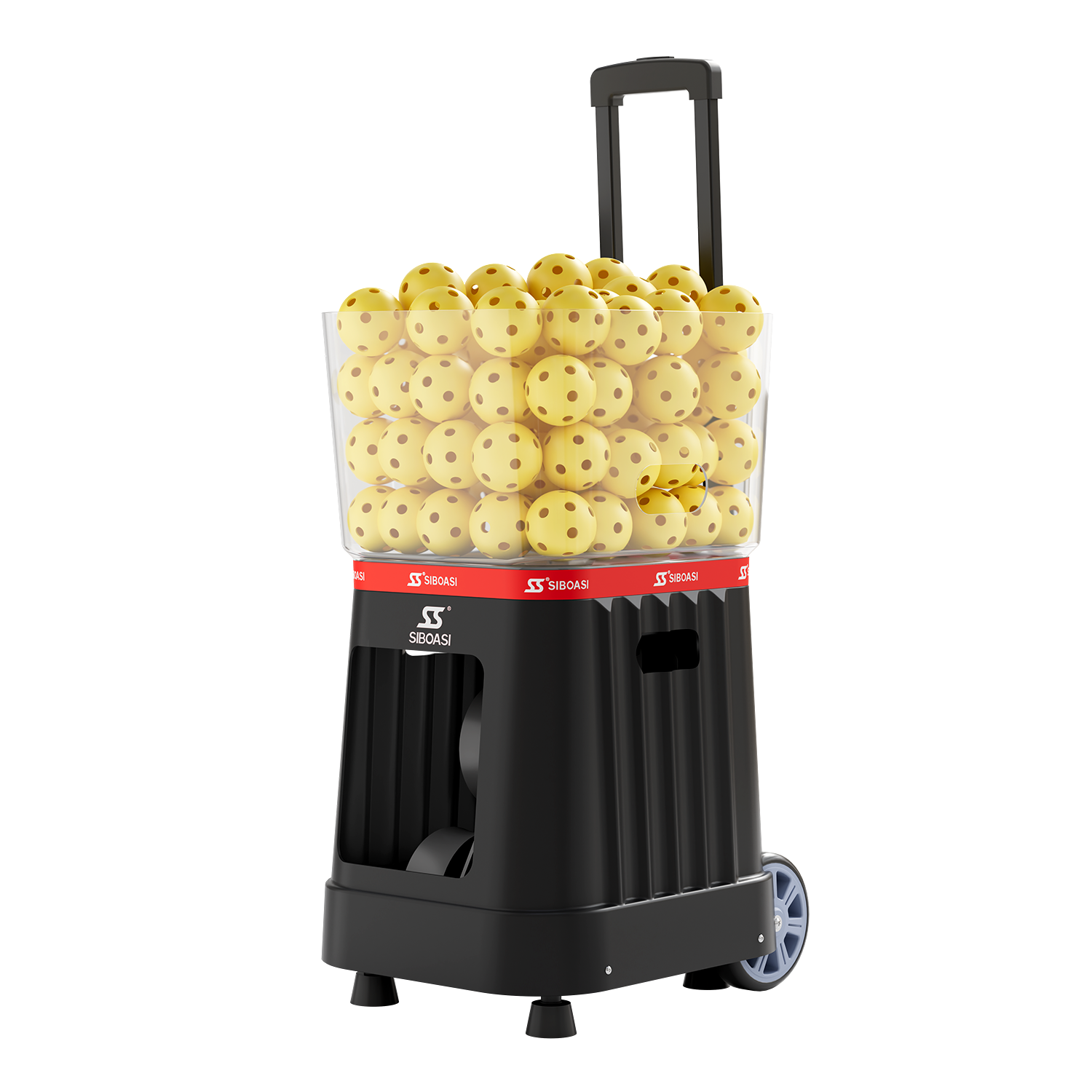
Manufacturers design different models for specific skill levels. We categorize them based on expected performance outcomes. You should match the technology to your current and future abilities.
Entry-level units prioritize simple, reliable mechanics. They feature lightweight designs weighing under 30 lbs. They fit easily into compact car trunks. Most include a basic internal battery system. You control speed and feed rates using simple manual dials. You do not need a smartphone to operate them.
Pros: Highly portable, budget-friendly, incredibly easy to operate.
Cons: Limited spin capabilities, lower ball hopper capacity.
Price Range: $500 – $800.
Best For: Perfecting kitchen dinks, basic volleys, and establishing early muscle memory.
Intermediate players demand more realistic shot simulations. These units feature internal dual-wheel propulsion systems. They offer 2-line oscillation to move you laterally. They usually support internal or external battery options. You can load over 100 balls at once for extended drills.
Pros: True topspin and slice, wide court coverage, extended drill times.
Cons: Heavier footprint, requires more garage storage space.
Price Range: $800 – $1,400.
Best For: Mastering third-shot drops against backspin, handling heavy topspin drives, and rigorous footwork drills.
Elite players need unpredictable, match-like conditions. Advanced models deliver this through complex programming. They feature deep smartphone app integration. You can run pre-programmed match simulations. You can design custom sequential drills. Multi-directional oscillation keeps you guessing on every single shot.
Pros: Complete customization, unpredictable feeds, professional training regimens.
Cons: Premium pricing, steeper learning curve for the app interface.
Price Range: $1,500 – $2,500+.
Best For: High-intensity cardiovascular training, game-scenario simulation, and professional coaching setups.
Skill Category | Ideal User | Core Mechanism | Weight Range |
|---|---|---|---|
Entry-Level | Beginners | Single-Wheel / Manual Dials | Under 30 lbs |
Intermediate | Club Players | Dual-Wheel / 2-Line Oscillation | 30 - 45 lbs |
Premium (AI) | Competitors & Coaches | App Control / Multi-Directional | 40+ lbs |
You must evaluate specific mechanical dimensions before buying. Do not blindly trust basic marketing sheets. Analyze realistic feed rate and speed constraints first. You need machines capable of very low speeds. A 10 mph setting allows for realistic, soft dinks. Conversely, you need speeds reaching 65+ mph to practice defending overhead smashes. Interval timing remains equally crucial. Look for machines offering 1 to 10 seconds between shots. Fast intervals build rapid reaction times.
Next, examine the internal propulsion systems closely. Single-wheel mechanisms offer very limited spin. They push the ball out relatively flat. Dual-wheel internal mechanisms provide true topspin and slice. They spin the top and bottom wheels at different speeds. This speed differential grips the ball and creates aggressive rotation. Intermediate and advanced players absolutely require dual-wheel systems.
Power and battery realities dictate your actual court time. Standard SLA (Sealed Lead Acid) batteries cost less upfront. However, they weigh significantly more. Lithium-ion batteries provide lighter weight and steady power delivery. Detail realistic runtimes carefully before purchasing. Expect 2 to 4 hours of actual hitting time. Recharging an SLA battery often requires 6 to 10 hours. You must plan your sessions accordingly.
Finally, compare complex app ecosystems against physical remotes. Bluetooth and Wi-Fi connectivity look great on paper. However, public courts experience heavy signal interference. Cell phones drop connections constantly during sessions. Simple physical fob remotes provide undeniable reliability. They offer zero-latency control. You can pause the feed instantly when a stray ball rolls onto your court.
Owning complex court equipment comes with hidden operational realities. Brands rarely advertise these daily friction points. We want you fully prepared for the logistical challenges ahead.
The portability trap catches many buyers completely off guard. Lugging a 40-pound machine across a crowded parking lot requires physical effort. Lifting it into a high SUV trunk challenges your lower back. You absolutely need models featuring large transport wheels. Extending luggage-style handles remain a strict necessity. A machine becomes useless if you dread moving it.
Ball degradation causes severe internal jamming over time. Machine wheels grip the plastic violently to generate spin. They wear down standard pickleballs much faster than normal paddle play. The balls eventually become slick and smooth. Slick balls cause internal misfires. They lose traction on the wheels. They frequently jam inside the internal feed chute. You must clean the wheels and replace slick balls regularly.
Improper storage leads directly to premature battery death. Never leave these machines in hot car trunks. Avoid storing them in freezing winter garages. Extreme summer heat permanently degrades lithium cells. Freezing temperatures destroy SLA batteries rapidly. Temperature fluctuations also cause internal condensation. Moisture ruins the delicate motherboards. Always bring your equipment indoors after every single practice session.
You now understand the mechanical realities of court equipment. Follow this simple framework to make your final choice. This structured approach prevents expensive purchasing mistakes.
Step 1: Measure Your Space. Verify your vehicle trunk dimensions first. Ensure you have adequate climate-controlled home storage. A bulky machine sitting in the hallway causes daily frustration. Make sure you can lift the specified weight comfortably.
Step 2: Assess Your Tech Tolerance. Decide between "plug-and-play" manual dials or complex app-configured sequences. If you hate troubleshooting Bluetooth connections, buy a manual remote model. If you love tracking data, explore the Smart Pickleball Serving Machine Trainer with APP Control.
Step 3: Factor in Necessary Accessories. Budget an extra $150 to $250 for supporting gear. You need a sturdy ball hopper. You absolutely require ball-retriever tubes to save your lower back. You must buy a fresh batch of 100 identical outdoor balls. Mixing different ball brands causes erratic feeds and jams.
The right equipment acts as your personal, on-demand coach. It delivers perfect repetitions whenever you want them. It accelerates your skill progression dramatically. However, it must align perfectly with your logistical limits. It must match your current and future training ceiling.
We highly encourage you to prioritize daily reliability. Ease of transport matters far more than obscure programming features. You will use a simple, portable unit far more often than a heavy, complicated one. Focus on mastering the fundamental shots before worrying about complex drill sequences.
Take action on your training today. Check specific product pages for updated 2026 pricing. Review comprehensive comparison charts before buying. Secure your ideal setup and start climbing the tournament brackets.
A: No. Tennis machines use entirely different wheel calibrations and feed chutes. A pickleball is smaller, lighter, and made of hard plastic. Tennis machines will crush or severely damage plastic pickleballs. You must use dedicated equipment designed specifically for the sport.
A: You can expect a realistic range of 2 to 4 hours. Manufacturers often claim higher maximums. However, heavy oscillation, high speeds, and maximum spin drain the battery much faster. Cold weather also reduces effective battery life significantly during morning sessions.
A: We highly recommend seamless, hard outdoor balls. They withstand the aggressive friction of propulsion wheels much better. Never mix different brands or wear levels in the same hopper. Mixed balls cause erratic speeds, unpredictable trajectories, and internal jams.
A: It is never safe to leave it in your vehicle long-term. Extreme summer heat permanently damages lithium batteries. Freezing temperatures destroy SLA batteries. Rapid temperature fluctuations also cause internal motherboard condensation, which ruins the delicate electronic circuitry.


