


Views: 0 Author: Site Editor Publish Time: 2026-06-24 Origin: Site


Transitioning from relying on a pro shop to stringing your own frames requires a significant upfront investment. The primary dilemma for frequent players and club stringers is whether to save money using a manual setup or invest in an automatic model. Manual machines rely on physical mechanics like gravity or springs. These manual systems can sometimes introduce human error and physical fatigue over time. Electronic machines offer exceptional precision instead. They do, however, require clean environments and specialized maintenance commitments. Our primary goal is to provide an objective, engineering-based comparison. We want to help buyers evaluate which equipment aligns perfectly for their volume, budget, and precision needs. You will learn exactly how physical mechanics contrast against electronic load cells. We will also examine specific sport requirements and break-even points to guide your final choice.
Precision: Automatic machines utilize "constant pull" technology, micro-adjusting for string stretch in real-time, resulting in a truer stringbed compared to manual "lockout" machines.
Volume & Speed: An automatic racquet stringing machine cuts stringing time by up to 50% and significantly reduces operator fatigue, making it essential for stringers processing 5+ racquets weekly.
Cost-to-Benefit: Manual drop-weight machines are the most cost-effective entry point for casual players, but lack the scalability required for a stringing business.
Maintenance: Manual machines are highly durable with few points of failure; automatic machines require clean environments and occasional professional calibration or electronic repairs.
Understanding how different tensioning mechanisms work is crucial for any player. Equipment choice dictates the overall consistency of your stringbed. A high-quality stringing machine functions as the foundation of your racket preparation. We categorize these devices primarily by their tensioning mechanisms.
Drop-weight models use a simple lever arm system. Gravity pulls a heavy counterweight downward to apply tension to the string. This method is highly accurate if you execute the technique perfectly every single time. It remains very slow, however. The operator must manually lift and lower the weight arm until it sits completely horizontal. This process relies heavily on operator technique and patience.
Manual crank systems rely on a spring-loaded tension head. The operator rotates a handle to pull the string. Once you reach the desired tension, a mechanical brake engages. The head "locks out" and stops pulling immediately. This mechanism is significantly faster than a drop-weight system. The main drawback is ignoring continuous string stretch. Once the brake engages, the machine stops compensating for any further elasticity in the string.
Electronic models represent the pinnacle of stringing technology. They use a microprocessor-controlled electronic load cell. The central advantage here is "constant pull" technology. The internal motor actively pulls the string until you secure the base clamp. It constantly compensates for the string's natural elasticity in real-time. This dynamic adjustment creates a more consistent stringbed.
Rushing the drop-weight: Failing to let the arm settle completely horizontally causes major tension inconsistencies.
Jerking the manual crank: Pulling the crank too fast triggers the lockout prematurely before the string fully extends.
Ignoring string guides: Bypassing the diapablo or string guides on electronic tension heads leads to inaccurate pull angles.
String performance directly correlates to tension accuracy. How a machine handles string elasticity determines the final dynamic feel of your racket.
All modern strings begin stretching the very moment you apply tension. Polyester strings and multifilament cores exhibit high initial elasticity. This phenomenon is known as the "creep phase" in materials science. The string continually elongates under stress. You must manage this elongation properly when stringing rackets to achieve optimal playability.
When you tension a racket on a manual crank, the head locks immediately. The mechanical brake holds the string in place. The string itself continues to stretch naturally, however. This ongoing stretch results in an immediate tension loss before you even secure the clamp. A lockout pull might register your target weight initially, but the actual tension drops rapidly in the seconds following the lockout.
Automatic setups continuously monitor the pull weight. If your target is set to a specific poundage, the microprocessor checks the load cell constantly. If the pull drops slightly due to string stretch, the motor re-engages automatically. It pulls the string back to the precise target weight before you clamp it down. This micro-adjustment happens in fractions of a second.
Rackets prepared on electronic units feel noticeably tighter. They maintain their dynamic tension significantly longer than frames processed on a manual lockout device. You achieve a much truer reference tension. Professional players demand this exact level of consistency for tournament play.
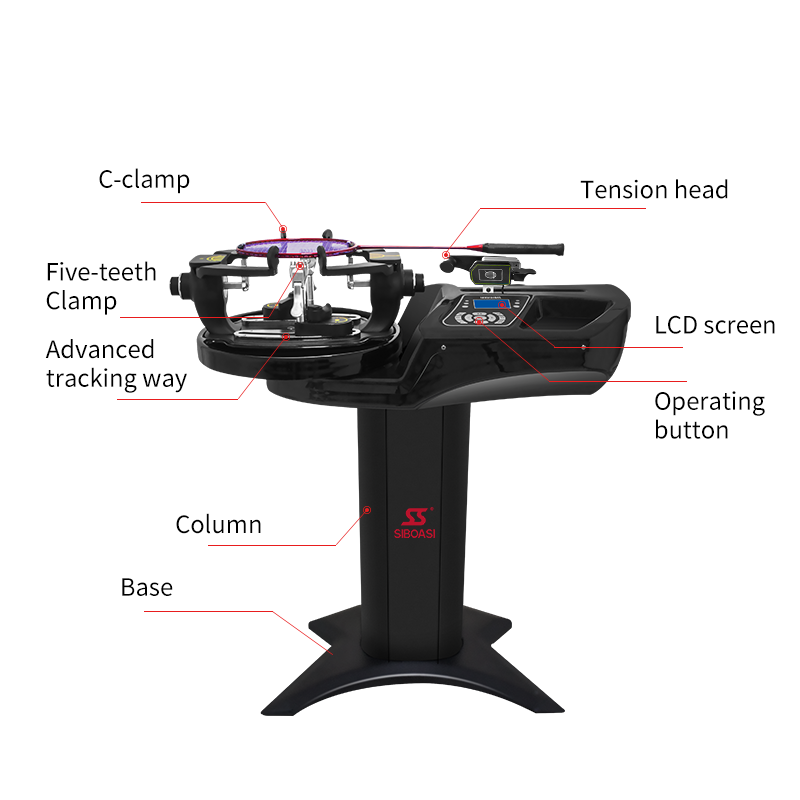
Efficiency becomes paramount when you process multiple frames per week. The physical toll of stringing can accumulate quickly.
Processing speed varies drastically based on your chosen mechanism. The chart below illustrates the average time required for an experienced operator to complete a standard frame.
Machine Type | Average Time per Frame | Speed Efficiency |
|---|---|---|
Manual Drop-Weight | 45–60+ minutes | Low |
Manual Crank (Lockout) | 30–40 minutes | Moderate |
Automatic Electronic | 20–30 minutes | High |
Manually cranking or lifting a heavy drop-weight repeatedly takes a severe physical toll. You place continuous strain on your shoulders, wrists, and upper back. An automatic racquet stringing machine eliminates this repetitive strain entirely. Electronic models require only the simple push of a button or a light tap of a foot pedal. You preserve your energy for playing the sport rather than prepping your gear.
Manual models require significant mechanical sympathy. You must develop a distinct "feel" for the machine. Automatic units reduce the variables associated with human error. The microprocessor handles the intricate pulling logic. This automation flattens the learning curve for beginners. It also ensures strict consistency across multiple frames handled by different operators.
Purchasing a machine represents a serious capital expenditure. You must weigh the upfront outlay against long-term operational benefits.
Manual configurations range from very accessible entry-level options to premium lockout units. Basic drop-weight systems serve as highly cost-effective entry points. Premium manual cranks require a larger upfront commitment. A reliable entry-level automatic model commands a significantly higher initial investment. Professional tour-grade electronic systems sit at the very top of the market spectrum.
You must calculate your break-even point based on your expected volume.
Personal Use: A casual player paying shop fees for restringing can justify a basic manual unit quickly. The savings from avoiding labor fees cover the lower initial cost within a few dozen string jobs.
High-Volume Operations: An automatic system allows an operator to process many more rackets per hour. This increased throughput generates higher hourly revenue. You justify the higher upfront investment rapidly when processing high volumes.
Manual systems boast incredible longevity. They often last decades requiring only basic cleaning and occasional spring calibration. They feature very few moving parts. Electronic models carry distinctly different risk profiles. They face potential motherboard failures and load cell degradation over time. They often require expensive proprietary replacement parts.
Keep electronic tension heads covered to prevent dust accumulation on the optical sensors.
Clean clamp teeth regularly using rubbing alcohol to prevent string slippage.
Calibrate manual crank springs bi-annually to ensure tension accuracy.
Different racket sports demand different structural approaches. You cannot treat all frames identically when applying tension.
These specialized frames are exceptionally fragile. They often require incredibly high tension relative to their lightweight structural integrity. Frame warping represents a constant threat. An automatic setup with a highly secure 6-point mounting system is highly recommended. The precise constant pull mechanism prevents sudden tension spikes. This smooth application of force prevents the delicate carbon fiber from cracking under pressure.
Tennis frames feature much thicker beam widths. Tennis strings are also significantly thicker and more durable. These robust frames are much more forgiving of manual lockout tensioning. A high-quality 2-point or 4-point mounting system often suffices for tennis. Competitive tennis players will still notice the distinct tension discrepancy between manual and automatic string jobs, however. The refined precision of an electronic pull translates directly to better ball control on the court.
Selecting the ideal equipment requires honest assessment of your personal volume and precision goals. Choose a manual device if you string strictly for yourself a few times a month. Manual drop-weights and cranks prioritize budget efficiency and offer fantastic durability. They do require a high tolerance for longer working times. Choose an automatic setup if you process rackets for clients or play competitively. Electronic models are essential if you process more than three frames weekly or require absolute tension fidelity.
We advise you to audit your current weekly stringing volume carefully before making a purchase. Assess your available workspace to determine if a tabletop or stand model fits better. Always check the warranty terms of electronic machine manufacturers to protect your investment. Your choice ultimately dictates your operational efficiency and your on-court performance.
A: Yes. While they are highly accurate, electronic load cells should be checked periodically. You should use a digital tension calibrator to ensure the microprocessor is reading the pull correctly. Regular calibration prevents gradual tension drift over time.
A: Yes. Many manual crank machines can be retrofitted with an aftermarket electronic tension head. This upgrade path allows users to spread out their financial investment over a longer period while eventually gaining constant-pull functionality.
A: For badminton and squash, absolutely. Those thin frames require maximum support to prevent warping. For tennis, a high-quality 2-point or 4-point system is acceptable. A 6-point system always provides maximum security against frame distortion during high-tension pulls, however.


