


Views: 0 Author: Site Editor Publish Time: 2026-01-07 Origin: Site


Pickleball, a sport that blends elements of tennis, badminton, and ping pong, has gained immense popularity over the past few years. Known for its fast-paced gameplay and low-impact nature, pickleball is a great way for people of all ages to stay active. However, just like any sport, consistent practice is key to improvement.
To aid players in refining their skills, a pickleball machine has become an essential tool for solo practice. But what exactly is a pickleball machine, and how does it help players improve their game? This article will delve into the features, benefits, and considerations for using a pickleball machine to enhance your training.
By the end of this article, you’ll have a clear understanding of how a pickleball machine can benefit players of all skill levels and help you decide whether it’s the right training tool for you.
A pickleball machine is an automatic device designed to launch pickleballs to players, allowing them to practice their shots, footwork, and reflexes. The machine simulates different ball deliveries by adjusting the speed, spin, and frequency of the balls. These machines are specifically built to provide consistent and repetitive practice, making them an ideal tool for players looking to improve their skills without needing a partner.
Pickleball machines come in a variety of models, from basic machines that deliver simple, consistent balls to high-tech machines that can adjust the ball speed, spin, and oscillation settings. The main purpose of these machines is to provide training that mimics the unpredictable nature of a real match, allowing players to practice on their own terms.
While there are several types of training equipment available for players, the pickleball machine stands out due to its unique ability to simulate match conditions with adjustable settings. Here’s how it compares to other training methods:
Feature | Pickleball Machine | Traditional Methods | Tennis Ball Machine |
Consistency | Provides consistent ball delivery | Variable depending on the partner | Consistent delivery with adjustable settings |
Speed and Spin | Adjustable for different ball speeds and spins | Dependent on partner ability | Adjustable, but typically higher speeds |
Footwork Practice | Random oscillation to practice movement | Limited footwork practice | Limited footwork practice |
Solo Practice | Ideal for practicing alone | Requires a partner | Can be used solo, but typically for more advanced players |
Cost | More affordable | Free (if you have a partner) | Generally more expensive |
In comparison to traditional methods like practicing with a partner, the pickleball machine offers several advantages, such as consistent delivery, customizable settings, and the ability to practice alone at any time.
One of the most important features of a pickleball machine is the ability to adjust the ball speed. Speed control allows players to tailor their training based on their skill level and goals. Beginners may want to start with lower speeds to focus on technique, while more advanced players can increase the speed to simulate real match conditions.
Spin control is another essential feature that can significantly impact your practice. Being able to adjust for different types of spin, such as topspin, backspin, or sidespin, helps players improve their ability to handle various ball trajectories during a match. Practicing different spins is critical for developing shot variety and strategic play.
Ball Speed | Ideal For | Speed Range (mph) |
Slow | Beginners or technique-focused practice | 10-20 mph |
Medium | Intermediate players working on consistency | 20-40 mph |
Fast | Advanced players needing fast-paced practice | 40-70+ mph |
Topspin: Causes the ball to dip faster and curve upward after bouncing.
Backspin: Makes the ball travel slower and causes it to drop faster after bouncing.
Sidespin: Causes the ball to curve to the left or right during flight.
The ball frequency is another key feature of a pickleball machine. Frequency refers to how often the machine delivers a ball to the player. Adjustable frequency settings allow players to tailor the intensity of their practice.
Low Frequency: Ideal for beginners or those working on their technique. Provides time to focus on each shot.
Medium Frequency: Perfect for players aiming to improve consistency and rhythm.
High Frequency: Advanced players who want to simulate real-match conditions and enhance reaction time.
Pickleball machines can also offer random oscillation, which changes the ball placement and direction with each shot. This feature replicates the unpredictability of real gameplay, requiring players to move and adjust their positions quickly.
Many pickleball machines are designed to be lightweight and portable, making them easy to transport from one court to another. The compact design ensures that players can practice at home, at clubs, or during travel.
Machines are also built with durability in mind, using sturdy materials that can withstand frequent use on outdoor courts. Many models come with protective covers to prevent weather damage and extend the machine’s lifespan.
One of the primary benefits of a pickleball machine is its ability to provide consistent ball delivery, which is critical for developing technique and muscle memory. Repetition is key to mastering any skill, and a machine allows players to hit the same shot multiple times without any interruptions.
This consistency helps players focus on refining their shot mechanics rather than dealing with variations in ball delivery. The more consistent you are with your shots, the more prepared you will be for actual matches.
With a pickleball machine, players don’t need a practice partner to improve. This is particularly beneficial for players who don’t always have someone to practice with or for those who want to fit in training during off-hours. The machine allows players to practice their shots on their own time, improving autonomy in their training.
Pickleball machines can mimic match scenarios by adjusting the speed, spin, and ball placement. This helps players practice reacting to different types of shots, improving their court coverage and decision-making skills. Simulating real match conditions allows players to build confidence in their ability to handle different in-game situations.
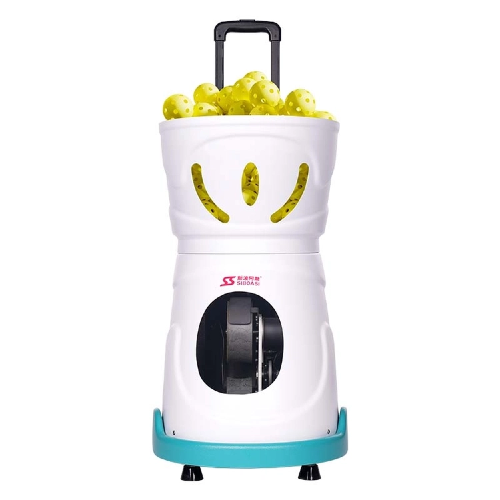
Pickleball machines are ideal for beginners because they allow players to practice consistently and develop basic skills. By setting the machine to slower speeds and lower frequencies, beginners can focus on learning proper technique without feeling overwhelmed. The machine also offers the ability to gradually increase the challenge as players improve.
For intermediate and advanced players, pickleball machines provide a great way to refine specific shots, such as volleys, groundstrokes, and serves. By adjusting the speed, spin, and frequency, advanced players can simulate high-pressure match conditions, improving their reaction time and strategic shot selection.
Pickleball machines are invaluable tools for coaches and training centers. They can be used to conduct drills for multiple players at once, focusing on specific aspects of the game. Coaches can use the machine to provide group training sessions, allowing players to practice consistently without requiring additional assistants or partners.
When selecting a pickleball machine, consider the following factors to ensure you choose the right one for your needs:
Ball Speed Range: Make sure the machine offers a range of speeds that align with your skill level.
Spin Options: Choose a machine with adjustable spin to practice a variety of shots.
Portability: If you plan to transport the machine regularly, ensure it’s lightweight and easy to carry.
Ball Capacity: Check the hopper capacity to ensure you can practice for an extended period without reloading the machine.
Pickleball machines come in different types, each designed for specific needs and preferences:
Type | Features | Best For |
Basic Model | Simple speed and frequency adjustments, no spin options | Beginners or casual practice |
Mid-Range Model | Speed, spin, and frequency adjustments, larger hopper | Intermediate players or club use |
Advanced Model | Programmable settings, high ball capacity, advanced spin options | Professional training or intensive practice |
A pickleball machine is an essential tool for taking your game to the next level. Whether you're training alone or with a coach, it provides consistent and customizable practice that helps you refine your skills in a focused and efficient manner. Suitable for players of all skill levels, from beginners to advanced, the machine enables you to improve a variety of skills, including footwork, serving, and volleying.
By incorporating a pickleball machine into your training routine, you can significantly enhance your performance. It simulates real-game conditions, offers the flexibility for solo practice, and ensures consistent training, making it a valuable investment in your development.
At New Silk Road Global Limited, we specialize in providing high-quality pickleball machines designed to suit your specific training needs. Our machines offer a range of features that cater to different skill levels, helping you maximize your practice sessions. For more information or to find the perfect pickleball machine for your training, feel free to contact us. We’re here to support your journey to pickleball excellence!
1. What is a pickleball machine?
A pickleball machine is an automatic device that delivers balls to players at adjustable speeds, spins, and frequencies, allowing for consistent, solo practice.
2. How does a pickleball machine help improve my game?
It helps improve consistency, shot accuracy, and reflexes by providing repetitive and customizable practice. It also simulates match conditions, improving reaction times and court coverage.
3. Can I use a pickleball machine for solo practice?
Yes, one of the major benefits of a pickleball machine is that it allows you to practice alone, providing consistent ball delivery without the need for a partner.
4. Is a pickleball machine suitable for beginners?
Yes, pickleball machines can be adjusted to lower speeds and frequencies, making them perfect for beginners to practice basic skills and develop technique.
5. How often should I use a pickleball machine?
Using the machine 2-3 times a week, combined with real-game play, can significantly improve your consistency and overall performance.
6. Are there different types of pickleball machines?
Yes, there are various models, ranging from basic machines for beginners to advanced machines with programmable settings and high ball capacities for intense training.


